Be warned if you ever try to have some information removed from public display, you might become a victim of the Streisand Effect, where the act of censoring something unintentionaly causes the information to be widely publicised.
The term originated in 2003 when Barbra Streisand attempted to have a photo which included her beach front home removed from a photographic survey documenting Californian coastal errosion, her suit of the photographer and site host led to widespreed knowledge of the photo and over 400,000 additional site veiws within the month.
Saturday, October 2, 2010

The future's in viral.
Viral marketing. We've all been exposed to some sort or form of viral marketing in our lives, but what makes it so effective. Most of the time they don't even mention the product they are advertising, but is that the point?
Its such a confusing, deceptive form of media but can also be amusing, exciting and provide entertainment around the office as passed through the companies emails. I mean a gorilla playing drums? How often do you see that!
I'm pretty sure everyone who has seen that ad has attempted to air drum to that song, dun dun - dun dun - dun dun - dun dun - bah bah.
Cadbury is well known for their viral marketing campaigns from the drum playing gorilla to the obscure moving eyebrows of the two kids with a balloon. Balloons and eyebrows, seriously? What does chocolate even have to do with that?!
The eyebrows ad was such a hot topic around the time it was released in 2009 that it had over 4 million views within the first few weeks after the launch.
Viral marketing seems to be coming more and more to the forefront of advertising with ads such as the V 'Rocket man' appearing on NZ television screens causing viral stirs not only nationally but worldwide. Is the future of advertising in viral marketing?
Ill leave you with one of my favorite viral marketing ads for Carlton Draught beer.
Piracy in perspective.
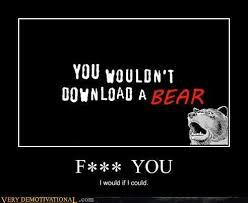
While I'm sure most people are accustomed to pirates trying to defend their stance, I'd just like to throw out another little defense out there. Am I some sort of legalize piracy type? no, do I think it's justifiable? not really, but what I would like to try to do is try to clean up the images of pirates a little bit, they aren't as bad as the media makes them out to be.
For years people moaned how they liked a couple of songs on a CD, but the rest of the CD was bad and they could not justify the exuberant prices charged just to have the couple of songs they liked. Of course not all albums were like this, and if you look to the highest selling CD's, you'll generally find that they are albums that are good throughout. Oh to be able to have just those couple of songs, and perhaps put them into your own compilations, so you were only ever listening to what you thought was good. A long came file sharing, making this possible, giving you only what you wanted and best of all it was effectively free. File sharing grew and grew and grew, the record companies sat back, continuing to push their CD's at expensive prices while people started growing accustomed to free music of their choice. Buy a $30 CD to get the couple of songs you want, or just download those two songs for free? pretty easy choice. For how long music listeners had pretty clearly started to say that this was the future, digital distribution, but the record companies didn't want to budge. It took so long for the record companies to get their ass into gear and start providing this service that clearly thousands and thousands of people wanted to use that it's a miracle that anyone went to use itunes and the like once it came out, after all we had been getting this for free for years. Despite this, if we look at the figures herehttp://www.ifpi.org/content/library/Jupiter_Research_study_on_online_piracy.pdf we see that pirates, compared to music buyers, are
31% more likely to buy single tracks online.
33% more likely to buy music albums online.
100% more likely to pay for music subscription services.
60% more likely to pay for music on mobile phones.
showing clearly that, although not all, many pirates simply wanted the service provided by digital distribution and file sharing rather than just skimping out on paying. Now that is available in a pay format, they will pay.
Mpfreemium
I'm not a taker when the concept of 'freemium' is brought up. I understand it, of course, as a much needed resolution to the concerns of digital rights and intellectual property of content made available on the Internet, but in all honesty, the thought of paying for everything just bums me out.
I realise that I've probably just highlighted the biggest problem that the net generation suffer from- a really, really unhealthy sense of entitlement. From music, to images and photographs to ideas, if it's available somewhere on the Internet, it goes without saying that someone is going to take advantage of it costing them nothing other than bandwidth.
I should say first that as an avid music downloader, a lot of what I get is totally legal; most progressive record labels and artists are working with the times and offer free downloads as tasters of what's to come from them, but it's a matter of knowing where to look. Commercial artists are less likely to do this, as they can afford taking the risk of their music being shared online, as their CDs will still always be sold.
But as I sit here, eating the KitKat my stepbrother left in the fridge a few days ago, it has occurred to me that paying for Internet content would make me less likely to try new things. I don't like wafer at all, but it was sitting in the fridge, it was cookies-and-cream flavour, I was hungry, and I know he's not around for the next few days. I wasn't going to walk all the way to the dairy to try something that's been forgotten and left to rot. It's sort of the same with downloading music; a blog might describe a song really well, and though it's not by an artist I like or even particularly know of, I will probably download the song. For example, when my favourite music blog wrote about The-Dream's track Make Up Bag in their Stuck on Repeat feature they made it sound so tempting to be a The-Dream fan that I saved the track, and bought the album it's from when it was released a few months back (which is Love King- not as solid as his other albums, but a must-have for the grind-and-click R&B fans out there).
I realise that I won't be able to use ye olde 'poor student' excuse to justify my rabid mpfree diet forever, but if everything is soon to come down to freemium, and being an Arts student I'm bound to never having any money and a bad credit rating, how will I ever find other artists who know the exact right moment to drop the bass?
The virtual girlfriend
 The bond with the virtual girlfriend is more important than the relationship with people in real world?! There is an increase in number of men who want marry with the virtual girlfriend in Japan. Do you know the game, “LovePlus”? It is released in Japan, 2009 and developed by Konami for NDS (Nintendo DS) soft as dating simulation game. This game allows players to play with a girlfriend in real-time, so that they can spend the time with her in all seasons. The feature of NDS allows the players to interact with the girlfriend using stylus and have a little chat through microphone. This game offers the virtual reality and has recorded a massive hit when is released. In July, there was a big event for this game in Atami where is famous for resort in Japan. Within a month, more than 1500 men visited there to enjoy the date with the virtual girlfriend. (The player can go Atami for a short trip with the girlfriend within the game, so they visit there to feel a sense of reality.) Some of them pay the hotel expenses for two people! During the short trip, they tend to interact with her only and immersed themselves in the virtual world. The portability of NDS allows the player to interact with the virtual girlfriend and take them to the virtual world wherever they are. However, too much focus on love in virtual space sometimes isolates them from the real world and might lead to loose an opportunity of relationship with others.
Googlezon
"EPIC 2015" is a mix of recent internet media history and speculation on the future. It was posted in 2007, so some of the speculation concerns the present. It is a fascinating look into where exactly media could be headed in our not so distant future. As the title mentions, the predictions are made for the year 2015. The original was titled “Epic 2014,” and due to the passing of time and developments in media it had quickly become outdated.
The movie speaks for itself, but there are some pertinent points that link to things we have been discussing in class. The notion of the public becoming their own reporters and broadcasting directly to other users via an IPod or mobile device is an interesting idea, but in actuality may be too “noisy” to really work. It would require some sort of labeling system to sort the posts, which would rely on the broadcaster to accurately tag their information. The potential for abuse and too great a focus on the individual seems like this promotion would be unlikely.
Another interesting point in the film is the idea of a merger between Google and Amazon. The search capabilities of Google mixed with Amazon’s suggestions would revolutionize the way we interact with the internet media. This complete personalization of our media consumption being chosen by third parties is a frightening concept, and one that is becoming more of a reality every day. While it seems unlikely that this would completely replace normal news outlets, it certainly is a potential future and one that we need to seriously think about before it’s upon us.
Friday, October 1, 2010
Digital Capitalism and Digital Marxism
Analyzing capitalism in a Marxist sense can have its advantages for actually using capitalism. It can give one a greater understanding of the concept of capitalism to use it to ones advantage (even though Marxism would state that this is a bad thing). There are a few ways this can be done through the digital media.
One would be breaking capitalism down in a Marxist sense for free use of services on the internet. This would be freemium. Making facebook free (which it is now) and then excluding certain things you can do on facebook and making the public having to pay or subscribe to it on top of also adding new features on facebook that you would have to pay for. Marxism would say that facebook should be all free but freemium could work on facebook and one could see profits.
There is also the criticism of digital capitalism from Marxism of turning workers into full-time slaves. Someone who works on computers all day long then goes home to use the same kinds of digital services on the computer take away the power of what the worker could want to do in their spare time. Such as doing nothing. As was stated in the lecture there is now a stigma on doing nothing as it is seen as unproductive. So Marxism would state that digital capitalism has brainwashed the public into always having to do something and not taking the time to be free and relax.
To the point of this now. If one could use freemium on some internet site and make profits to start a company and they have the knowledge of what capitalism does to society, this can be expressed by the very person(s) who used capitalism to build an authority. They could say that there shouldn't be a stigma on doing nothing and that people should be free to do nothing if they want in there spear time and also simply just highlight issues sounding digital capitalism through the perspectives of Marxism. From this these two theories are still in some kind of a vicious cycle in this digital age.
Subscribe to:
Posts (Atom)