Thursday, October 14, 2010

illegal download of games


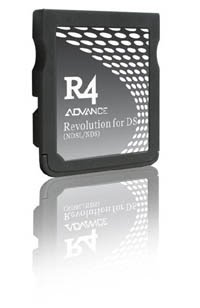
Do you know “Majikon”? Majikon is the abbreviated name for “magic computer” originally and is known as a game backup device. This supposes to be used for a copy or backup for the game and to boot up the image files with video game consoles. Now, this device has been made bad use. Not only music or movie, but also software of games faces the issue of piracy and copyright today.

Recently, the copy of video game software also has been distributed with free of charge through the Internet, so that people can get the copy of game’s file instead of having original game software. The game downloaded can be played exactly same environment of original, so user can play it using the device without buying the original.
Video game companies consider it as reverse engineering device. It is spread out and now available globally, so that those companies such as Nintendo have been trying to remove it from market.

This illegal download of games and the use of Majikon have been spread out and common even among young age. The problem is that there is an increase in number of people those who do not think that illegal download is bad things to do and lack a sense of morality. Especially, youth do not realise that they break the law. The important thing is to call people’s attention. If we can make good use of Majikon, it might be useful and worthy.

Censorship, who needs it?

Learning that 50 cent writes his own tweets I decided to find what words of wisdom 50 could bestow on me.
to my dismay I could only find up-to-date tweets that were a little more couth than what I had expected, but today I found this, a list of his brightest thoughts. A best of. Tweets about Politics, Genetics and computers, you name it 50 has his own opinion on it.

My personal favorite is on Obama's approval rating. "Obamas ratings are down cause he didn't include pimpin and hoein in stimulus package. Good hoes would boost male moral and fix the recession".

It seems like a joke, but it’s completely serious. Most celebrities have people, some time teams of people, working on their social network sites like Facebook and twitter, but not 50.
I commend him for this, I think its great that he doesn’t care what people think, expressing his opinion however vulgar it may be. It makes him seem like a real person, we're only a tweet away from talking to the REAL 50 cent, not someone controlling his twitter site. It’s also great for a good laugh

To finish things off I’ll share my favorite viral video of the last 6 months, The beautiful woman, the beautiful woman, the rippin’ and the tearin’, the rippin’ and the tearin’

Piracy again

I was reading over this article http://www.eurogamer.net/articles/2010-10-08-nintendo-piracy-not-behind-poor-sales in which the CEO of Nintendo makes the following comments

"I do not think we should attribute bad software sales solely to piracy.

"Even with piracy, as long as we can create products which can attract attention from many consumers and which can greatly entertain them, that software can make it to the number one position of the hit software sales chart."

too often music/movie/gaming companies are quick to use piracy as an excuse for poor sales of a product. I for one found it extremely refreshing to read Satoru Iwata's comments. You see it with games that are just crap, the developers turn around and cry that piracy has robbed the game of sales, music companies blame piracy for why the garbage CD that has only one good song isn't selling, Hollywood attributes poor movie sales on the film they threw millions upon millions into flashy effects but with little substance on piracy. It's much too easy of an excuse. The Nintendo Wii has outsold the PS3 and 360, it's also by far the easiest to mod out of all of these consoles, yet they don't play the piracy blame game.

Quality sells, quality makes money. People who produce quality aren't going hungry. If companies spent more time on trying to produce content that people want to spend money on and less time making rushed, cash grab type content, perhaps people would be more inclined to purchase.

Piracy... but everyone else is doing it!....


Piracy is for sure a contentious issue that has of course been elevated through the downloading a film improvements and rise of technology. On your dictionary.com Piracy is defined as “the unauthorized publication, reproduction, or use of a copyrighted or patented work” and we have all seen the ads at the start of a DVD about piracy, but do we actually consider downloading a film as being on the same level as stealing a car, or a handbag. The immediate answer seems to be no, why? Perhaps it is because we are used to having unlimited access to anything on the internet or because laws produced around copyright infringement have not yet found an effective way of monitoring and prosecuting people who download illegally. I think it is easy to get into the headspace that by downloading the only people who are losing out are the corporations such as Microsoft or record companies or production companies; we as a society can no longer subscribe to the concept of ‘ignorance is bliss’ as we are now comfortable enough with technology and know enough about copyright infringement to understand that we are doing something illegal when we are downloading a song or a movie through P2P networks. Most people I know take the view of who cares it’s not like I am going to be arrested. Piracy however affects far more people than just big corporations, think about a New Zealand artist you like, their incomes would be severely impacted from piracy, not only that new artists are having to find new ways of getting their music out as record companies have to be more selective about who they sign. Also with the amount of movie downloading occurring there is bound to be an impact on the industry and the amount and quality of films produced slashed if they are unable to make a profit. Now I am not saying I am completely innocent as I have used P2P networks, however until there is a way for piracy to be (a) effectively monitored and (b) fair and equally punishable offences then piracy will continue to be a problem in society not only for corporations but also people like the artists who lose out as well.

Criticism of face book.

Face book is a new phenomenon in the age of internet that came into existence only in the recent years. It is a friend-finding, dating, and information sharing website that many people and especially the young generations use to find their old friends, relatives and acquaintances, that they had lost contact with them. Face book account holders can share photos and information with one another, and enjoy the other facilities that face book provide for them. However, nowadays the growth of Face book as an online social networking website has faced many criticisms on many ranges of issues. Such criticisms are including data mining, the issue of revealing identities, and the lack of ability to cancel accounts without deleting all its contents manually first. That is why in 2008, many companies removed their advertisements from the Face book because the Face book authorities had displayed such ads on the pages of some controversial people and groups. The actual contents of the user’s page, forums, and groups have been criticised for raising some controversial topics such as Holocaust denial, and pro-anorexia etc. Censorship has also been discovered in Face book in several times. Many people in the world complained about the new changes in Face book especially the new format introduced in 2008, and also some changes made in terms and conditions to use this website with regards to removing the clause detailing the automatic expiry of the deleted contents. Face book has also been sued by some unsatisfied customers for a few times because of the matter of violation of intellectual property rights. However, with the on-going experience, reforms, and amendments that Face book is doing, this useful website has still a bright future, and it is in the process of shaping a part of the future in internet technology.

What is copy right

Copy right refers to some exclusive rights which are given to the author or creator of an original work. It is including the right to copy, distribute, and adapt that produced work that the original producer has made efforts to make it. Copy right does not necessarily protect the thoughts and ideas preserved in that type of work, but it only protects their expression, or fixation up to some extent. In many jurisdictions, copy right arises at the time of fixation, and it doesn’t need to be registered. Copy right owners have the right to control over copying and to prevent exploitation of their work for a particular period of time, and their work will then enter into what is said to be a public domain. There are also some uses, covered under the limitations and exceptions to copy right like fair use that people do not need permission from the copy right owner if they want to use them under some terms and conditions. All the other uses need permission, and the copy right owners can also officially license of transfer or assign their rights to whomever they want to. In the beginning, copy right laws were only applied for copying the books ,but later ,the authorities extended such rights to wide range of works such as translations ,derivative works ,dramative works ,maps ,paintings ,photographs ,motion pictures ,sound recordings ,and computer soft wares. Today the copy right laws have been standardized up to some extent through some regional and international agreements such as Borne convention, and the European copy right directives. Even though, some consistencies exist among the nation’s copy right laws, each jurisdiction has its own separate and distinct national copy right laws. These copy right laws are including licensing, transfer and assignment of copy right that still vary greatly between countries, and they are usually licensed on territorial basis.

Internet Censorship

Internet censorship means the authority’s controlling or suppressing the publication of any particular articles or information on internet, and also limiting the people’s access to read such kinds of information. In some ways, it is similar to off-line censorship. The difference is that national borders seem to be more permeable on line. For example when a country’s government ban some sorts of information, the people of that country can find the information they want from the websites based outside of that country. However, the government may try to suppress their people from having access to such websites by means of filtering and censorship even if they have no control over them. Filterings are normally done through the blacklists, containing the names of illegal websites. These blacklists are not usually published or revealed to public, and the authorities produce them either manually or automatically. Total control over the internet connected computers, and total internet censorship of information in some authoritarian countries such as Iran or North Korea, seem to be absolutely difficult because of the underlying distributed technology available on internet. For example data havens or pseudonymity such as free net allow the people to have unconditional free speech ,as the technology guarantees for the users that the materials are not removable and that the author of any type of information find it impossible to link to an organization or physical identity. Sometimes, the authorities are very deceitful. They normally deceive the internet users by the ISP, providing the fake messages of “not found”, “Error” or “Error 404”, which means the internet page exists, but they have blocked it. However, in November 2007, the father of internet Mr. Vint Cerf predicted that government led control of internet will soon fail due to the increasing level of private ownership.